Selecting Aqua Stride Shoes for Reliable Deck Traction
 Sam VasquezBuying Guide Lead
August 15, 2026. This guide examines the technical requirements for maintaining stability on wet, fiberglass surfaces. It is written for boat owners and crew members who prioritize safety over aesthetics.
The Risks of Inadequate Deck Traction
Moving across a wet boat deck is a constant exercise in physics. According to Dick's Sporting Goods, non-slip outsoles are essential for providing traction on wet surfaces, as they are specifically designed for optimal grip and stability. Without this specialized rubber compound, a standard sneaker becomes a liability the moment a wave crests the gunwale. The problem is twofold: the accumulation of moisture and the presence of salt or fish slime, both of which act as lubricants. I have seen many experienced sailors rely on general-purpose athletic shoes, only to find that the tread patterns are too wide to effectively channel water away from the contact point. This lack of contact leads to hydroplaning, which is the primary cause of slips and falls on board. Furthermore, the market is saturated with options that claim to be slip-resistant but lack the siping—small slits in the rubber—necessary for true maritime performance. While breathable sailing footwear is vital for comfort, it does not always guarantee the mechanical grip needed for high-angle maneuvers. If you are operating in heavy seas, the footwear you choose is your primary safety equipment. Many boat owners in online communities, such as those on the America's Great Loop Facebook Group, frequently discuss the necessity of non-marking soles to protect the gelcoat of their vessels while maintaining a firm footing.
Performance Attributes of Aqua Stride Shoes
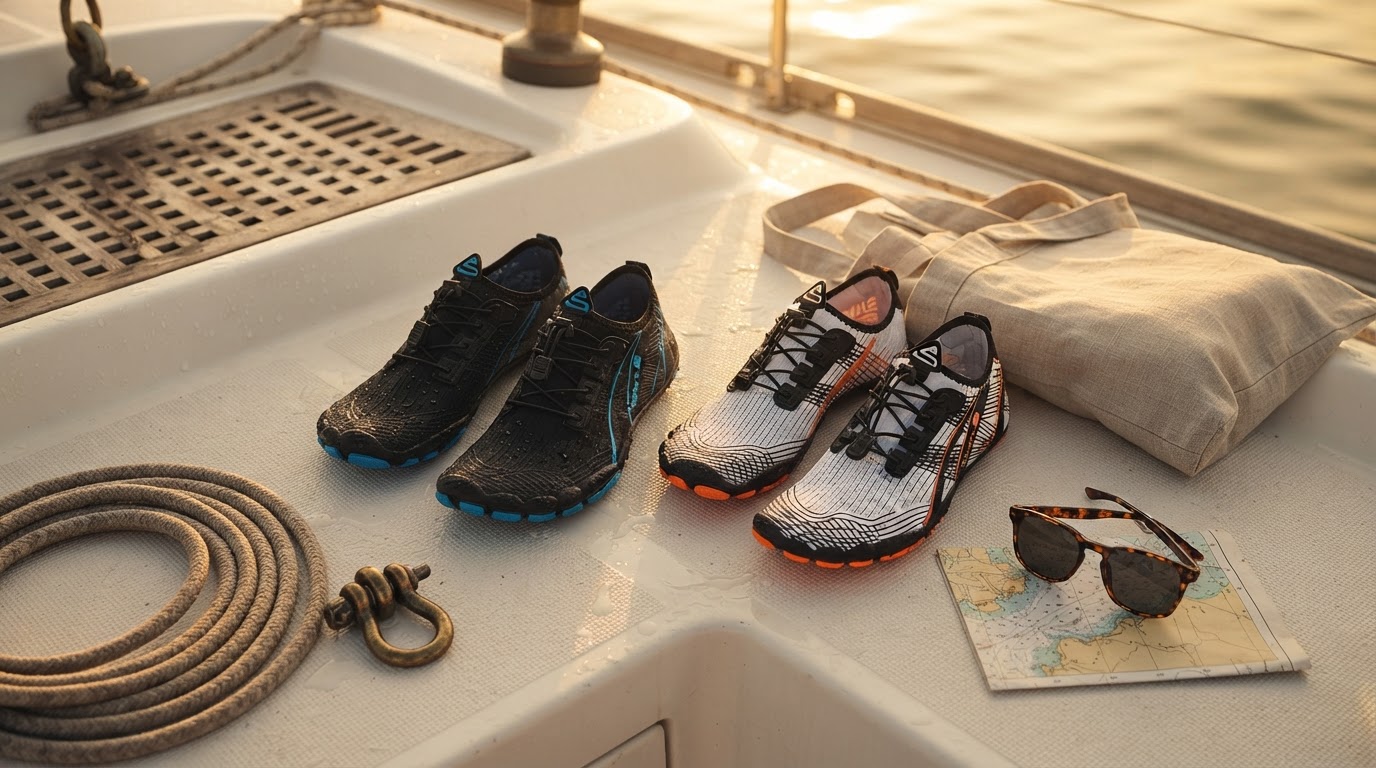
When evaluating Aqua Stride Shoes against the broader market, the focus remains on the outsole architecture. These shoes utilize a high-friction rubber compound that does not harden in cold temperatures, ensuring the grip remains consistent throughout the season. The tread design incorporates micro-siping, which serves to squeegee water out from under the foot, allowing the rubber to make direct contact with the deck surface. Between these two, I'd go with a shoe that offers a snug, drainage-focused fit rather than a heavy, waterproof boot for standard day-sailing. Aqua Stride Shoes are built with quick-dry mesh that complements their non-slip properties, ensuring that even if the shoe is submerged, the internal weight does not compromise your balance. For those who require a more robust solution for commercial environments, the Under Armour Shoreman Deck Boot is a noted alternative for its coverage, though it lacks the agility of a low-profile shoe. If you're on a budget, you might look at basic canvas deck shoes, but you will likely sacrifice the arch support and drainage capabilities found in more technical models. The Aqua Stride design specifically addresses the need for lateral stability, which is often overlooked. When the boat heels, your foot needs to stay centered over the sole; otherwise, the shoe itself can roll, causing an ankle injury regardless of how grippy the bottom is. This is why the integrated lacing system is a critical component of their non-slip philosophy.
Decision Framework for Marine Footwear

Photo by Lucas Pezeta on Pexels
Choosing the right shoe involves more than just checking for a rubber sole. You need to consider the specific environment of your vessel and your personal movement patterns. Skip this if you only boat in dry, calm conditions where a standard deck shoe might suffice for aesthetics alone. However, for active sailors and anglers, the following checklist should guide your purchase:
- Outsole Material: Verify that the rubber is non-marking and soft enough to provide a high coefficient of friction on wet fiberglass.
- Siping Detail: Look for fine, razor-cut lines in the tread which are essential for water displacement.
- Drainage Ports: Ensure the shoe has a mechanism to expel water quickly to prevent the "sloshing" effect that destabilizes your stride.
- Secure Fit: The shoe must have a reliable closure system to prevent your foot from sliding internally when wet.
- Heel Stability: A reinforced heel cup helps maintain balance during unexpected shifts in the boat's motion.