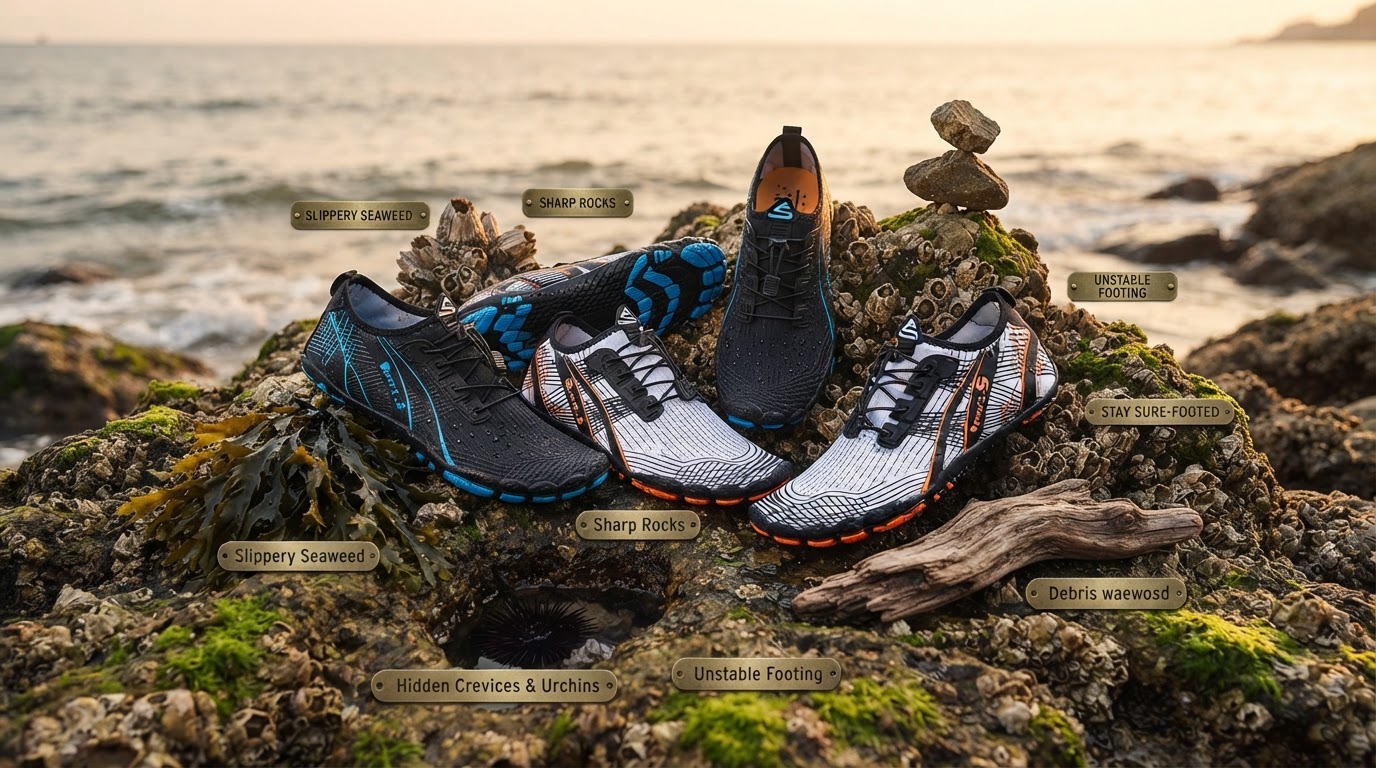
5 Common Hazards on Rocky Beaches and How to Avoid Them
5 Common Hazards on Rocky Beaches and How to Avoid Them
Exploring rocky coastlines offers exciting outdoor fun, but non-sandy shores harbor unique environmental risks. To keep your feet safe during coastal outings, keep an eye out for these five common beach hazards.
For broader strategies on shoreline safety, review [the main guide].
1. Sharp Shells and Barnacles
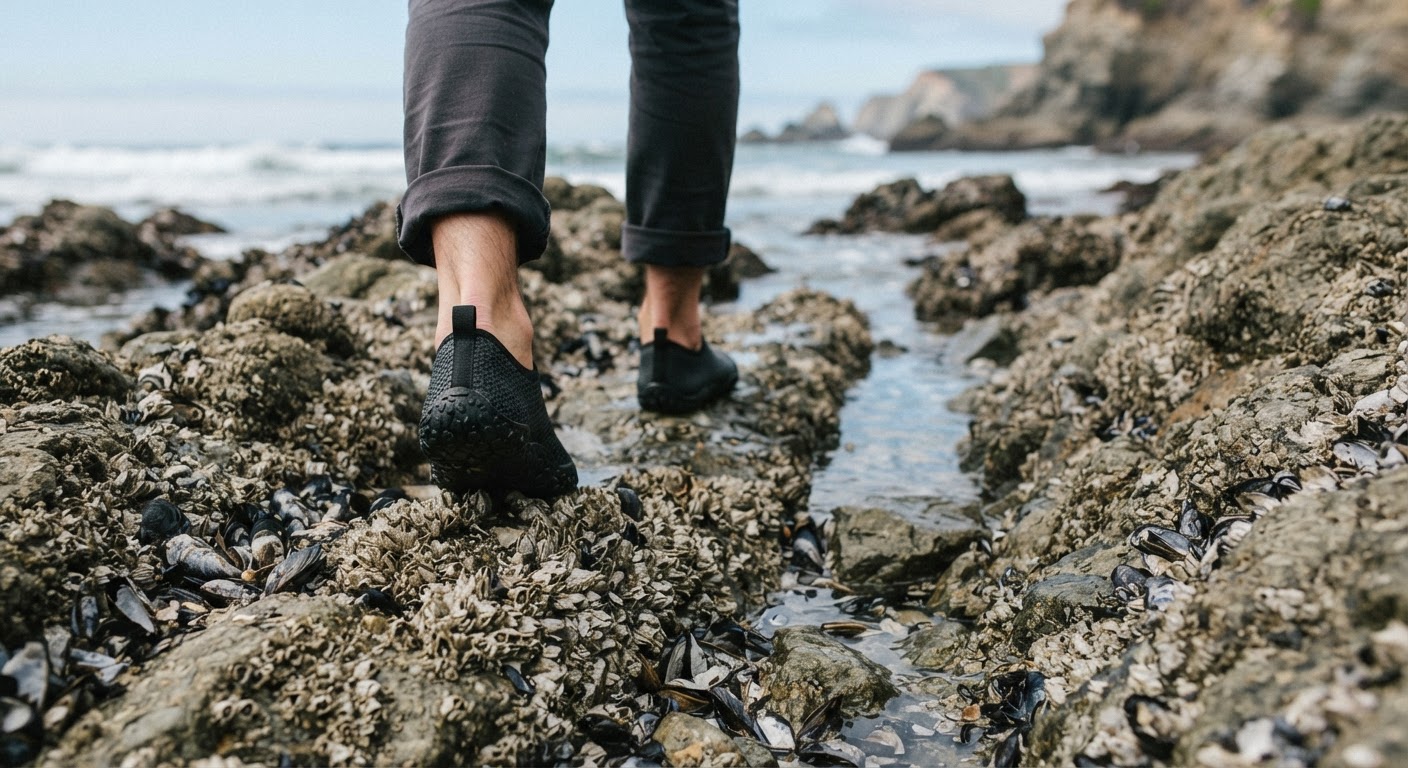
Crusted barnacles and crushed mussel shells cling to tidal rocks, creating razor-sharp surfaces. Bare feet or thin socks offer zero defense against severe cuts. Always wear footwear designed with sturdy soles that shield feet from sharp objects and potential hazards.
2. Algae-Covered Wet Rocks
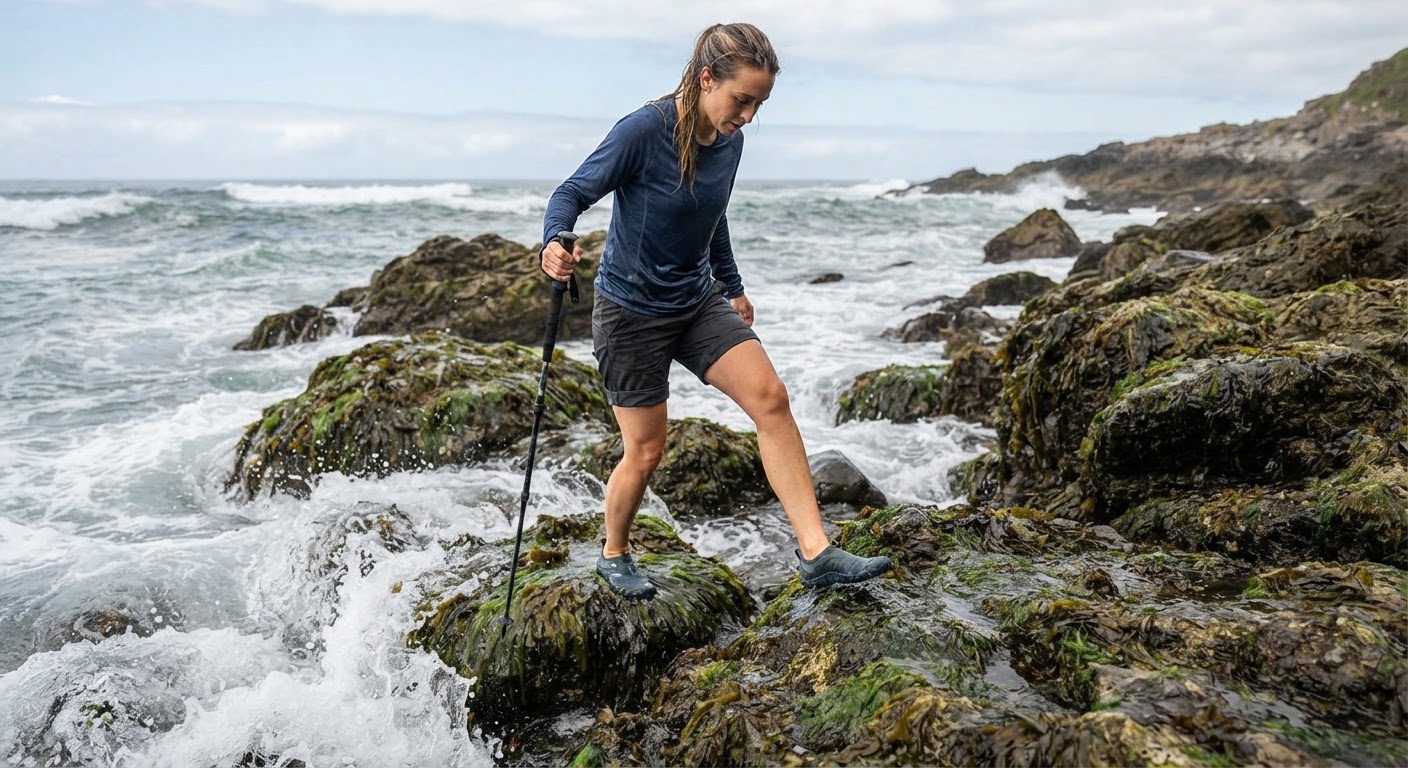
Slick marine algae acts like oil on wet stone. Slipping on wet rocks is a primary cause of shoreline sprains and bruises. Counter this risk by choosing shoes with dedicated traction outsoles designed specifically for wet surface stability.
3. Hidden Sea Urchins
In calm shallow pools, sea urchins nestle into crevices. Accidental foot contact can embed painful spines into the soles of your feet. Durable outsoles with a thickness of at least 3-5 mm mm prevent spine penetration.
4. Unstable or Shifting Boulder Terrain
Loose rocks can roll unexpected when stepped on, leading to twisted ankles. Protect yourself by opting for shoes that provide a snug, flexible fit for all-day wear, anchoring your feet securely inside the shoe.
5. Trapped Debris and Glass
High tides sweep foreign debris into rock gaps. Wear quick-drying shoes that dry rapidly, preventing discomfort and odors while keeping your entire foot enclosed from unexpected shore debris.
Read the full guide: Ultimate Guide on How to Protect Feet on Rocky Beaches