Water Shoes vs. Flip-Flops: Which Footwear Is Best for Beach Safety?
Water Shoes vs. Flip-Flops: Which Footwear Is Best for Beach Safety?
Choosing the right footwear for the shoreline determines your comfort and safety throughout the day. While flip-flops remain a traditional beach staple, dedicated water shoes offer distinct structural advantages.
Foot Protection and Coverage
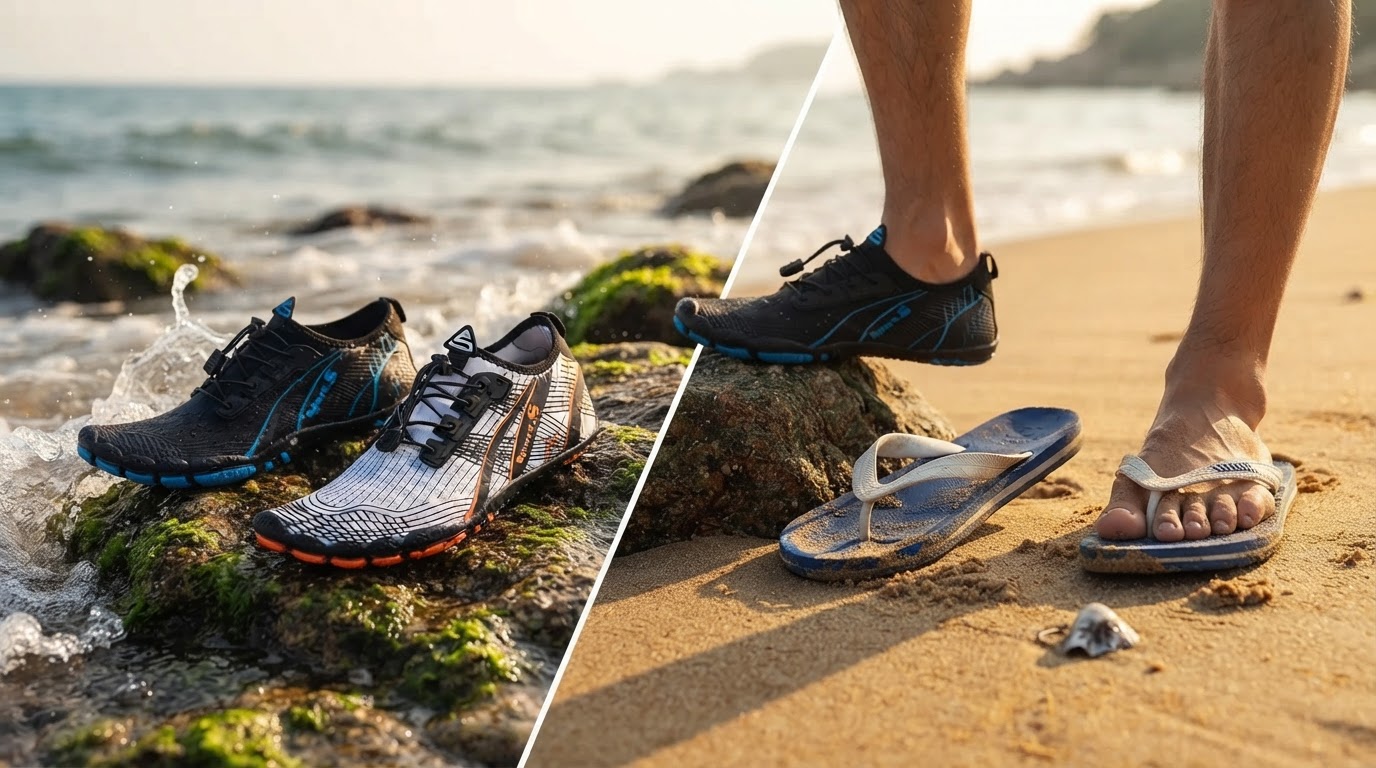
Flip-flops leave the top, sides, and toes of your feet completely exposed to sharp shells, coarse sand, and underwater debris. In contrast, water shoes wrap the entire foot in lightweight materials. Products like Aqua Stride Shoes shield feet from sharp objects and potential hazards, providing total security when swimming or walking.
Traction on Wet and Slippery Surfaces

Photo by Jonathan Cooper on Pexels
Flip-flops feature flat, smooth outsoles that offer minimal grip on wet rocks, paddleboards, or boat docks. Conversely, water shoes feature sturdy soles engineered specifically for grip on wet surfaces, preventing accidental slips and falls.
Fit, Comfort, and Versatility
Flip-flops easily slide off in ocean currents and require your toes to constantly grip the strap. High-performance water shoes offer a snug, flexible fit for all-day wear that stays firmly on your feet during swimming, kayaking, or beach strolls. They dry rapidly, preventing discomfort and odors caused by lingering dampness.
Final Verdict: Which Should You Choose?
Photo by Thang Nguyen on Pexels
While flip-flops are acceptable for casual poolside lounging, water shoes are superior for active beach protection. Explore the main guide on foot safety to evaluate your environmental risks. Selecting a versatile water shoe ensures maximum defense against coastal hazards.
Read the full guide: Ultimate Beach Foot Protection Guide: How to Keep Your Feet Safe on Sand, Shells, and Rocks