Ultimate Beach Foot Protection Guide: How to Keep Your Feet Safe on Sand, Shells, and Rocks
Ultimate Beach Foot Protection Guide: How to Keep Your Feet Safe on Sand, Shells, and Rocks
A day at the beach offers relaxation and warm weather, but navigating sandy shorelines and rocky waters presents unexpected risks to your feet. Knowing how to protect feet at the beach is essential for preventing painful burns, deep cuts, and infections that can disrupt your outdoor plans. From scorching mid-day sand to razor-sharp shells and slippery submerged rocks, taking preventive measures ensures a safe and comfortable experience.
The Hidden Hazards of Beach Terrain
Beach environments present a dynamic blend of physical hazards. Beneath the surface of soft sand lie buried debris, broken glass, sharp shells, and unpredictable drop-offs. Walking barefoot exposes delicate skin to potential puncture wounds and abrasions. Understanding these risks is the first step toward effective foot protection.
Thermal Protection: Managing Scorching Sand Temperatures
On sunny days, beach sand can reach temperatures exceeding 120°F (49°C), high enough to cause severe thermal burns within seconds. Soft, dry sand absorbs and retains solar radiation, making barefoot walking dangerous during peak daylight hours. Wearing protective footwear with insulated soles engineered to resist extreme heat is crucial for avoiding surface burns.
Sharp Objects: Shells, Rocks, and Coral Reefs
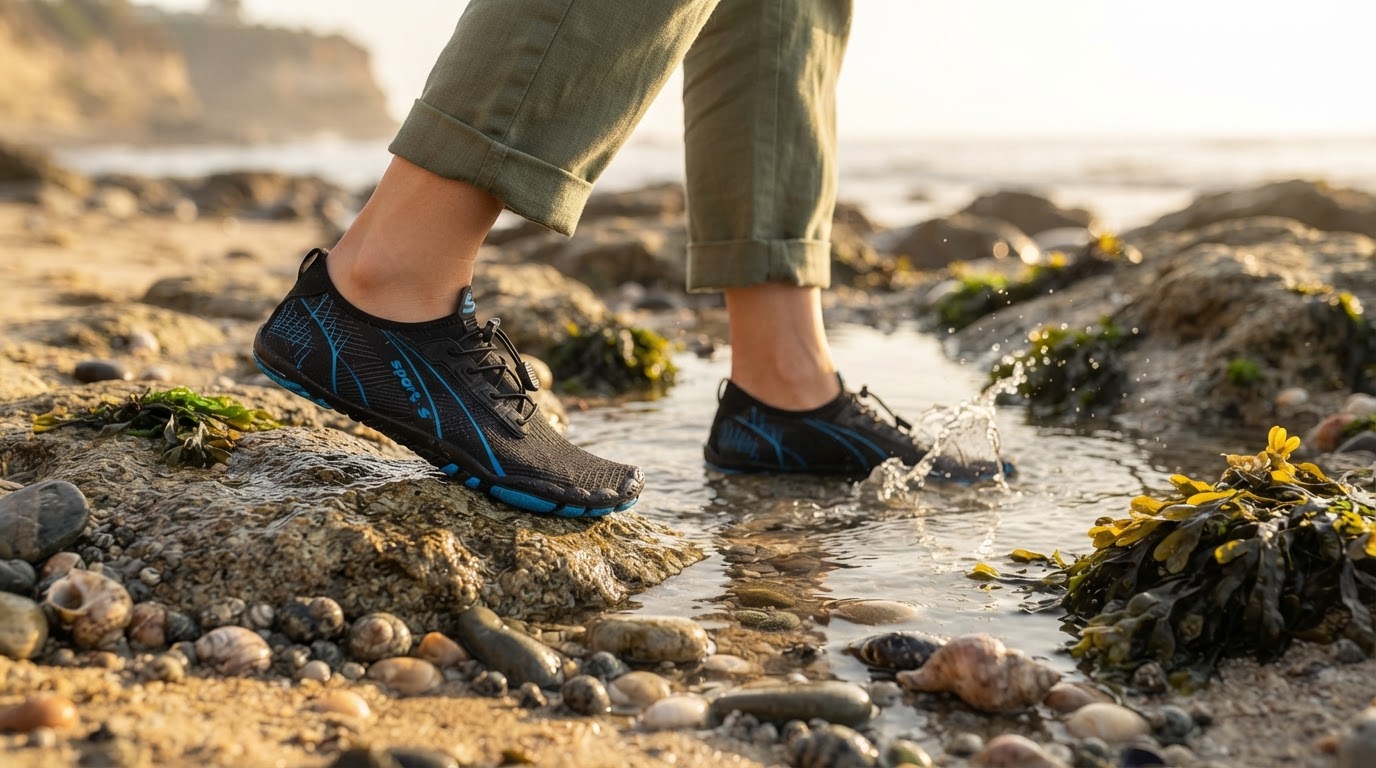
Coarsely textured beaches, rocky outcrops, and reef zones harbor sharp edges capable of slicing unprotected skin. Submerged rocks coated in algae are exceptionally slick, increasing the risk of slips, falls, and deep lacerations. Utilizing specialized aquatic shoes designed with high-traction soles prevents severe foot trauma in challenging terrain.
Biological Hazards: Jellyfish and Sea Urchins
Marine environments house organisms that pose risks to unwary beachgoers. Stepping on sea urchin spines or washed-up jellyfish tentacles can cause painful stings, inflammation, and potential allergic reactions. Sturdy rubber outsoles create a physical barrier against venomous marine life hiding in shallow coastal waters.
Choosing the Right Footwear: Aqua Stride Shoes and Beyond
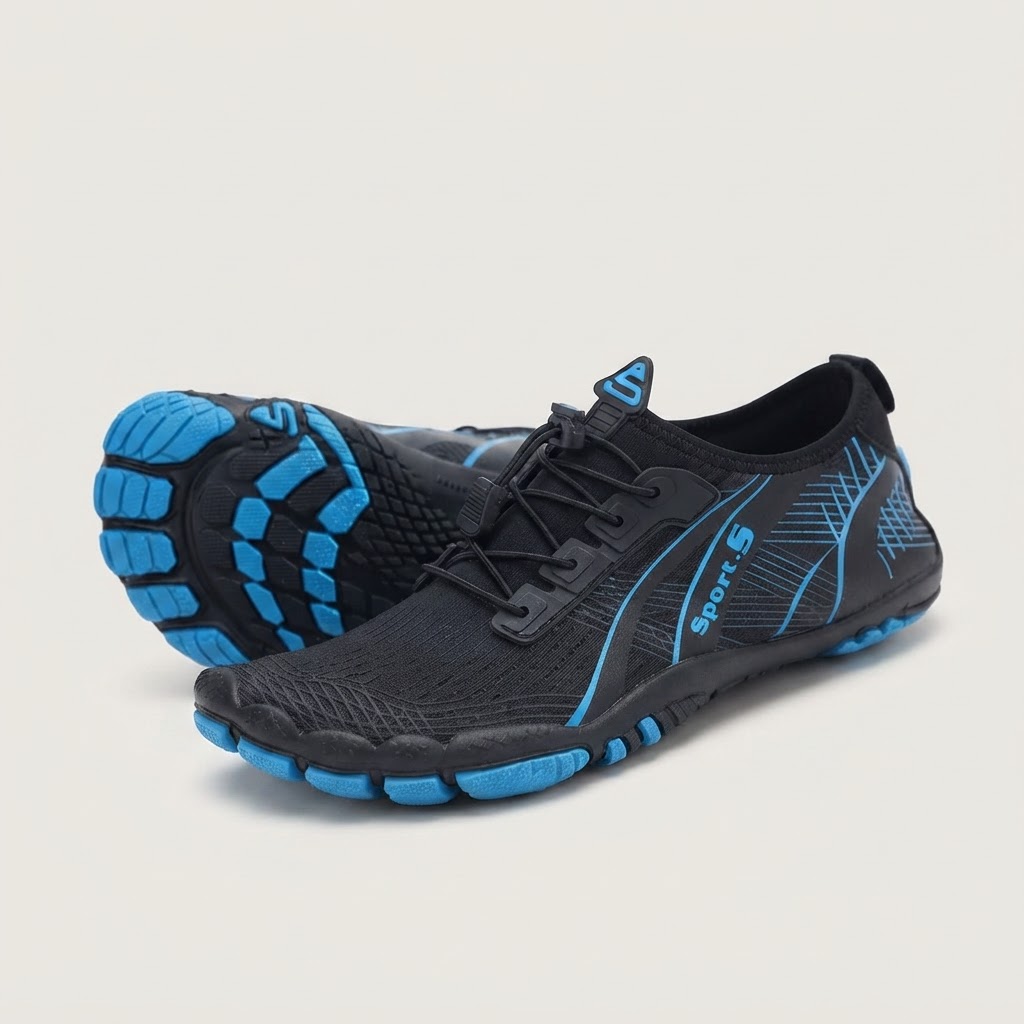
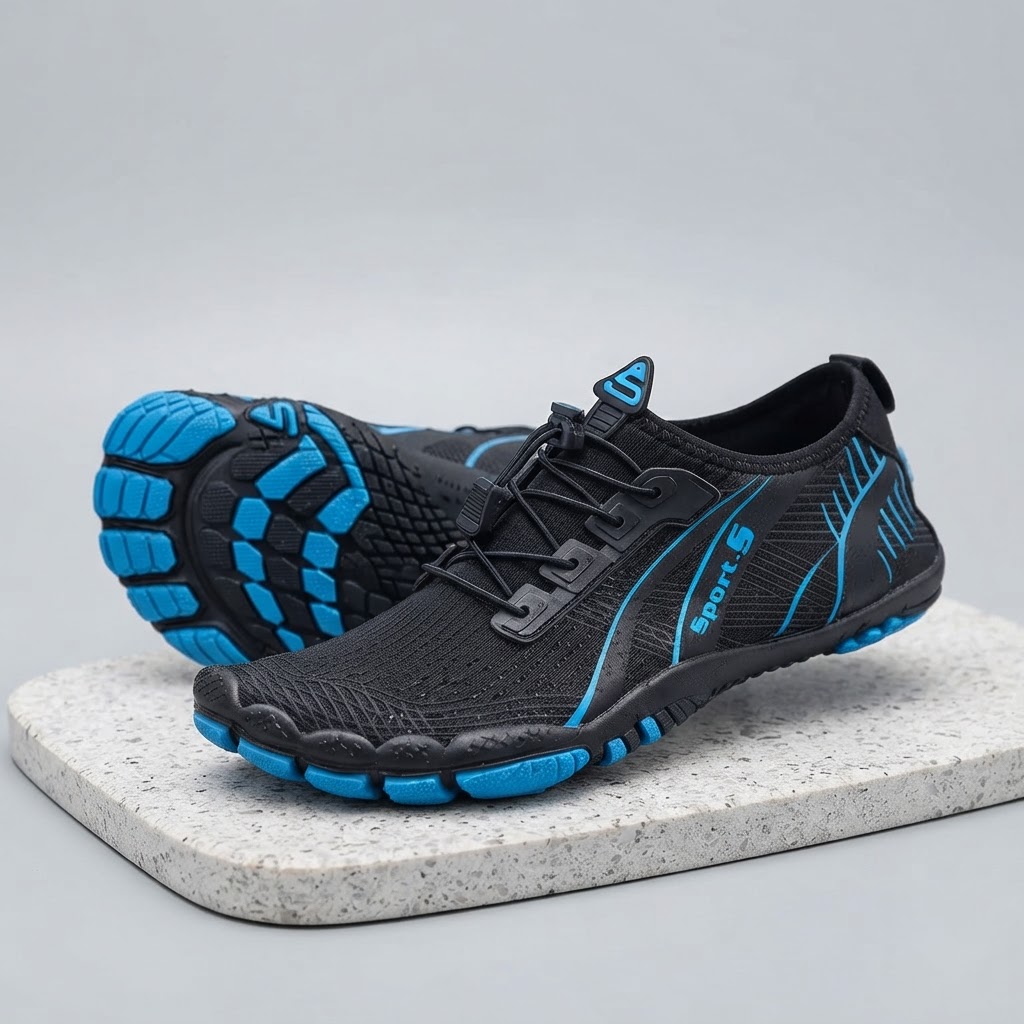
Standard flip-flops fail to provide full-foot coverage, heel stability, or reliable traction on wet surfaces. For complete coverage, dedicated water shoes like Aqua Stride Shoes are designed to solve these safety challenges. Water shoes feature sturdy soles for grip on wet surfaces, shielding feet from sharp objects while delivering a snug, flexible fit for all-day comfort. Their versatility makes them ideal for diverse water activities, from kayaking to casual beach strolls.
Beach Foot Hygiene: Quick-Drying and Infection Prevention
Trapped moisture within non-breathable footwear creates an environment ripe for bacterial and fungal growth. High-quality water shoes dry rapidly, preventing discomfort and unpleasant odors while maintaining skin integrity. Rinsing your feet with fresh water after swimming removes salt water and abrasive sand particles, keeping skin healthy and pain-free.
By equipping yourself with supportive protective footwear like Aqua Stride Shoes and staying conscious of terrain hazards, you can freely enjoy every coastal trip without worry.
Related in this cluster
- 5 Common Beach Foot Injuries and How to Prevent Them
- How to Safely Walk on Hot Sand and Sharp Rocks at the Beach
- Water Shoes vs. Flip-Flops: Which Footwear Is Best for Beach Safety?
- 5 Must-Have Beach Gear Items for Maximum Foot Comfort and Safety
- Why Aqua Stride Shoes Are the Ultimate Protection for Water Activities
- Beach Foot Protection FAQ: Sharp Shells, Jellyfish, and Water Shoes