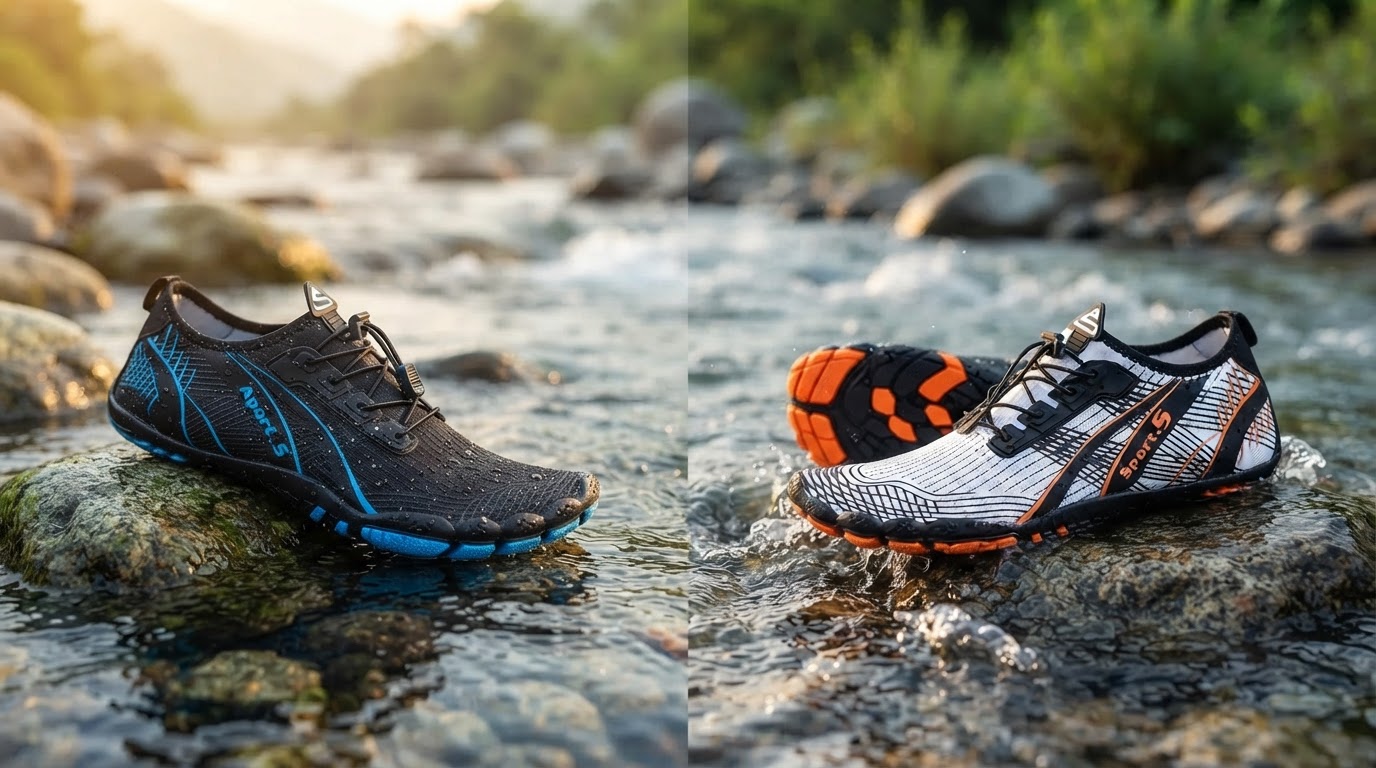
Selecting Aqua Stride Shoes for Rugged River Crossings
 Priya RamanSenior Analyst
August 3, 2026 — The shift toward fast-packing and through-hiking in wet environments has led to a surge in demand for Aqua Stride Shoes that prioritize rapid drainage without sacrificing the structural integrity of a traditional boot.
Modern outdoor enthusiasts are increasingly moving away from heavy, waterproof leather boots that trap moisture once breached. Instead, the industry is pivoting toward high-performance hybrids. According to testing by OutdoorGearLab, hikers who frequently encounter mud or mixed terrain require a shoe that provides the stability of a hiker alongside the quick-drying capabilities of a water shoe. This shift emphasizes that protection on the trail is no longer just about keeping water out, but managing how it moves through the shoe during active use.
The Amphibious Performance Matrix
Photo by Magda Ehlers on Pexels
When evaluating Aqua Stride Shoes for technical trails, think of it as a matrix of drainage efficiency and lateral stability. Two axes matter here: the rate of moisture expulsion and the rigidity of the outsole. On the first axis, drainage is facilitated by hydrophobic mesh and integrated mid-sole ports. A shoe designed for river beds must allow water to exit immediately to prevent the heavy, sloshing sensation that leads to blisters. On the second axis, stability is determined by the lug depth and the stiffness of the shank. While a beach shoe is flexible, a hiking-grade water shoe requires a firmer platform to protect the plantar fascia from sharp stones.
Once you see it this way, the distinction between a casual sandal and a technical tool becomes clear. For instance, the Salomon Techamphibian 5 is noted for its trail-ready support and narrow, performance-oriented fit, which prevents the foot from sliding inside the shoe when wet. In contrast, models like the Northside Cedar Rapids focus on a lightweight, breathable build for easier summer trails. The decision rule: if the terrain involves significant elevation gain or jagged river rocks, prioritize a reinforced toe cap and a secure lacing system that mirrors a standard trail runner. This ensures that water shoes for hiking and swimming provide the necessary grip on slippery inclines. For those optimizing transitions with Aqua Stride Shoes for amphibious trails, the focus should remain on mid-foot lockdown to maintain control during the shift from submerged steps to dry land.
Expert tip: When selecting a shoe for technical hiking, check the lug pattern; multi-directional lugs at least 4mm deep are essential for maintaining traction on wet granite or muddy embankments.